Christy Lynn

- Also learn about: How to Get Free Cryptocurrency
Before We Get Started Investing Your First $100
In 2017 and years prior, it was complicated for the average person to. Even when exchanges such as Coinbase and Binance were released, the average person had difficulty understanding what they were purchasing and whether these exchanges were legitimate. Now, as cryptocurrency is gaining traction with retail investors, it’s so easy for almost anyone to have access to purchase cryptocurrency in a user-friendly way. There are tons of options for buying cryptocurrency, and more are popping up all the time. All of these exchange options can be super overwhelming for many people. Some common questions you might be asking are below:Quick answer: To invest your first $100 in crypto: open an account on a regulated exchange like Coinbase, link your bank (cheaper than a card), and split your $100 between established assets, for example mostly Bitcoin and Ethereum. Consider spreading it over several weekly purchases (dollar-cost averaging). Turn on two-factor authentication, and only invest money you can afford to lose.
- How do you know which exchange to use to purchase cryptocurrency?
- Does that exchange even offer the cryptocurrency you want to buy?
- Do you have to use multiple exchanges?
Invest Your First $100 With Coinbase
Step 1: Complete Sign Up
So once you click the link and go through the signup process, you’ll see the Coinbase home page. The first thing you are going to do with ANY cryptocurrency is check out the price.
Step 2: Purchase $100 of Crypto
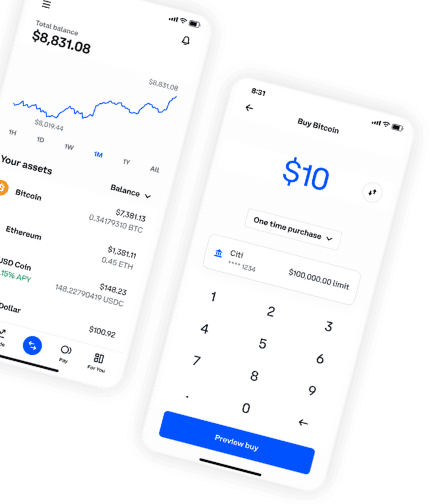
For our example, we will purchase $100 of Bitcoin. Click on “Bitcoin” and enter $100.
Setting Up Recurring Buys
One of the smartest investment decisions you can make is to set up recurring purchases of a cryptocurrency. This is also known as “Dollar-Cost-Averaging.” Dollar-Cost-Averaging allows you to purchase a set amount of crypto on a recurring basis (each day, each week, or each month). Purchasing cryptocurrency this way allows you to not need to “time” the market, as you’ll be purchasing a set amount on a consistent basis, and your investment will “average out” over time. Setting up a recurring buy on Coinbase is simple. Go to “Trade” and click on which cryptocurrency you’d like to buy on a recurring basis. For this example, we will use Bitcoin. Click “Buy.”

How to Sell Your Crypto on Coinbase
Another important thing we need to discuss is how to sell your cryptocurrency. How to sell cryptocurrency is a popular question that comes up frequently. I’ll walk you through how to do this, and it’s super simple. All you need to do is go to the crypto you’d like to sell (example: Bitcoin). Then click on “Trade” and press “Sell BTC.” Once you sell, you’ll have USD in your account. In your account, click on “USD” and then “Cash Out.” This will let you transfer your USD to your bank account.
Keeping Your Crypto Investment Safe
Using 2FA
Let’s talk about security for a minute. With ANY exchange you choose to use, I highly recommend setting up 2-factor authentication (2FA). 2FA just provides an extra level of protection on your account for your peace of mind. There are SO many scammers and hackers out there, so the extra 5 seconds it takes to go through an additional authentication method is well worth it in the long run. It is also best practice to use a complicated password. Don’t use your dog or cat’s name.Using Hardware Wallets
Speaking of security, I want to talk a bit about hardware wallets. I’ve written a full review of the best hardware wallets on the market today, so you’ll definitely want to check that out. Essentially a hardware wallet just lets you store your cryptocurrency off of the exchange. It would be kind of like taking all of your cash out of your bank and keeping it secure somewhere at an offsite location. A hardware wallet provides an additional layer of security, keeping your funds out of reach from hackers, and if anything happened to the exchange, your funds would still be safe. Many people don’t know that your cryptocurrency is not insured by the exchange if your account gets hacked. Many people don’t know this, so they don’t think they need a hardware wallet. This isn’t the case, and these exchanges are not the same as banks. If the exchange gets hacked at the exchange level and tons of people are affected, it is insured. But if a hacker swoops in and decides to target only you, you’ve lost your funds. You can alternatively use MetaMask, which is a free software wallet, to store your crypto.Make your $100 go further: fees matter
On a $100 purchase, fees can eat a noticeable chunk. Coinbase’s simple Buy button includes a spread plus a fee, so you might pay a few dollars. To pay less:
- Fund your account by bank transfer instead of a debit card.
- Use Coinbase Advanced and place a limit order, which skips the spread and charges a much lower percentage.
- Avoid converting back and forth between coins, since each trade costs fees and may be taxable.
A simple first-$100 plan
- Keep it simple: most beginners put the majority in Bitcoin and some in Ethereum, the two largest and most established cryptocurrencies.
- Avoid hype coins: skip meme coins and “next 100x” tips until you understand the risks. See how to research cryptocurrency.
- Think long term: expect big swings. Bitcoin fell about 50% from its October 2025 high within a few months.
- Know the tax rules: buying isn’t taxable, but selling or swapping can be. See our crypto tax guide.
The Bottom Line
I hope this article helped you feel more confident about investing your first $100 into crypto. It is not that complicated, but many people struggle to get started and make sure they purchase crypto securely.Frequently asked questions
Is $100 enough to start investing in crypto?
Yes. You can buy fractions of a coin, so $100 is plenty to learn how buying, storing and tracking crypto works.
What crypto should I buy with $100?
Most beginners start with Bitcoin and Ethereum. Read best cryptocurrencies to invest in for more context.
Do I need a hardware wallet for $100?
Not necessarily. A reputable exchange with two-factor authentication is fine for small amounts. Consider a hardware wallet as your holdings grow.