Christy Lynn

Quick answer: To start investing in crypto as a beginner: (1) learn the basics of Bitcoin, Ethereum and blockchains, (2) choose a regulated exchange like Coinbase, Kraken or Gemini, or a spot Bitcoin ETF, (3) start with a small amount you can afford to lose, (4) buy gradually with recurring purchases, (5) secure your account and consider a hardware wallet, and (6) keep records for taxes. Most beginners focus on Bitcoin and Ethereum before exploring anything else.
What is cryptocurrency, and why do people invest in it?
Cryptocurrency is digital money that runs on a blockchain, a public ledger maintained by thousands of computers instead of a bank. People invest for several reasons: Bitcoin’s fixed 21 million supply, growing institutional adoption (spot Bitcoin and Ether ETFs launched in 2024), and exposure to new financial technology like stablecoins and DeFi. Learn more in what is cryptocurrency, what is Bitcoin and what is blockchain.
Step 1: Decide how much to invest
Crypto is volatile. Bitcoin fell about 50% from its October 2025 all-time high within a few months, and smaller coins can drop 90% or more. Many advisors suggest keeping crypto to a small slice of your portfolio, often 1–5%. Build an emergency fund and pay off high-interest debt first.
Step 2: Choose how you’ll buy
- A crypto exchange: Coinbase, Kraken and Gemini let you buy, hold, send and stake crypto. See the best crypto exchanges.
- A spot crypto ETF: buy Bitcoin or Ether ETFs in any brokerage or IRA, with no wallet needed.
- A brokerage app: Robinhood and others sell major coins alongside stocks.
Step 3: Open and fund your account
- Sign up and verify your identity with a photo ID.
- Turn on two-factor authentication (an authenticator app or security key is best).
- Link your bank account. It’s the cheapest way to deposit.
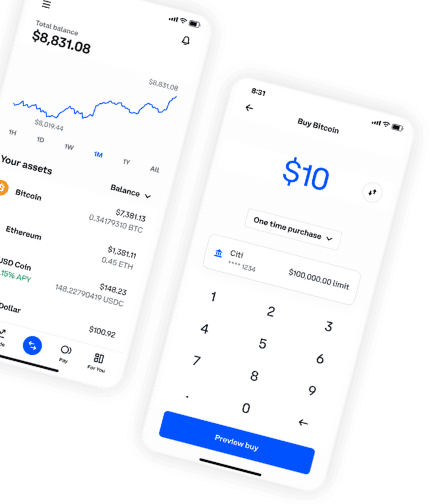
New to Coinbase? Open an account, or follow how to invest your first $100.
Step 4: Make your first purchase
Start with established assets. Most beginners put the majority in Bitcoin and some in Ethereum. Use the exchange’s advanced trading screen (such as Coinbase Advanced) and a limit order to pay lower fees than the simple Buy button.
Step 5: Invest gradually with recurring buys
Rather than trying to time the market, set up weekly or monthly purchases (dollar-cost averaging). It smooths out your average price and takes the emotion out of investing. See the psychology of a market cycle.
Step 6: Keep your crypto safe
- Use two-factor authentication on every account.
- Get a hardware wallet once your holdings grow. See the best hardware wallets.
- Protect your recovery phrase: write it on paper and never type it into a website or share it.
- Learn the common scams: pig-butchering schemes, fake support calls and fake giveaways. Read our guide to crypto scams.
Step 7: Understand crypto taxes
In the US, selling, trading or spending crypto can trigger capital gains tax, and staking rewards count as income. Starting with 2025 transactions, exchanges report sales to the IRS on Form 1099-DA. Track your trades with crypto tax software and read our crypto tax guide.
How to cash out
To sell, choose the coin in your exchange app, tap Sell, and convert to dollars. Then withdraw to your linked bank account, which usually takes one to a few business days.
Common beginner mistakes to avoid
- Buying a coin because of social-media hype
- Investing money you’ll need soon
- Using leverage or margin
- Leaving large amounts on an exchange
- Panic-selling during a downturn
Learn to evaluate coins yourself with how to research cryptocurrency.
Frequently asked questions
How much money do I need to start investing in crypto?
Very little. Most exchanges let you buy fractions of a coin starting around $1–$10.
What is the safest crypto to invest in?
No crypto is truly safe from price swings, but Bitcoin and Ethereum have the longest track records and the deepest markets.
Should I buy crypto or a crypto ETF?
ETFs are simpler and work in retirement accounts. Owning crypto directly lets you hold your own keys, transfer it and stake it.
Can I lose all my money in crypto?
Yes, especially with small or speculative coins. Diversify and only invest what you can afford to lose.